- Small Business
- By Copify
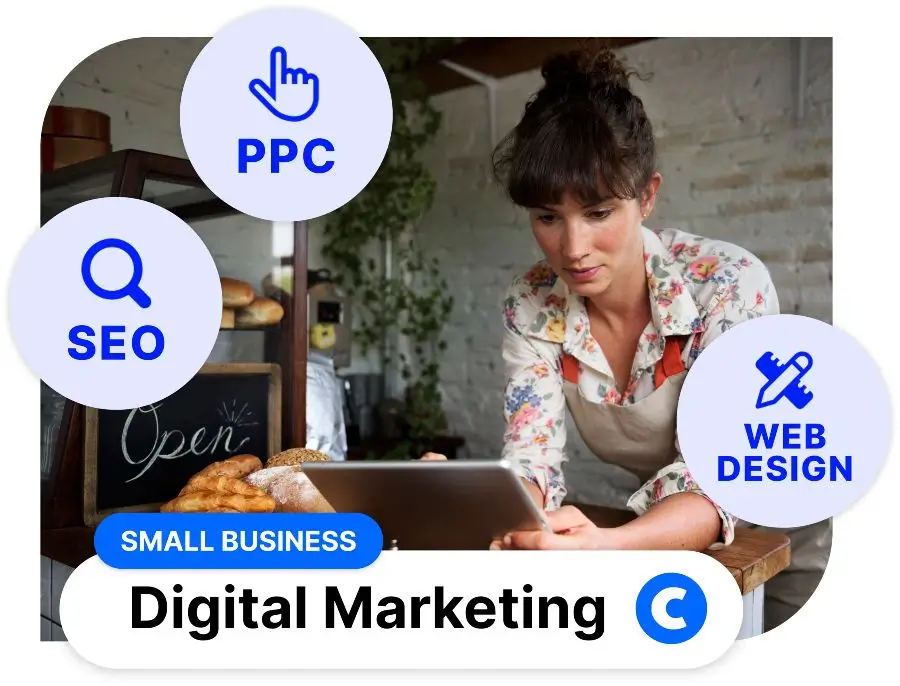
Digital marketing for small business allows you to compete in a crowded online environment without relying on large budgets. It helps you attract attention, build trust, and convert interest into action.
For many small companies, marketing once felt unpredictable. Results were hard to track, and decisions relied on intuition. Digital tools change that completely. You can track where customers come from, what content they engage with, and the reasons behind their conversions. This clarity gives you control.
Trusted by teams in Healthcare, Dental, Plastic Surgery, Law, Startup, Fintech, Small Business, and premium services.


What Is Digital Marketing for Small Businesses?
Digital marketing services for small businesses refer to all online activities used to promote products or services. These activities rely on digital channels rather than traditional media.
They include websites, search engines, content, social platforms, email, and paid advertising. Each channel plays a specific role. This system allows small businesses to stay agile in changing markets.
Marketing becomes more intentional, efficient, and aligned with real customer needs.
Why Digital Marketing Is Important for Small Businesses
Customer behavior has changed permanently. People search online before making decisions. They compare options, read reviews, and evaluate credibility. Your digital presence shapes that perception.
Without visibility, trust is lost before contact begins. Digital marketing ensures you appear at the right moment. It also builds long-term value. Email lists and media profiles grow over time. For small businesses, this creates stability. Growth becomes predictable instead of accidental.
Digital marketing helps businesses communicate consistently across channels. Your message stays clear whether customers find you through search, social media, or email. This consistency reduces confusion and strengthens brand recognition. People are more likely to trust businesses they recognize.
Benefits of digital marketing for small businesses
One of the major benefits of digital marketing for small businesses is cost efficiency. You decide how much to invest and where. Another advantage is targeting. You reach people who are already interested.
Digital marketing also supports personalization. Messages feel relevant, not generic. Over time, customers build digital assets. These assets continue working even when campaigns pause. Most importantly, you gain insight.
Want more leads & sales? Let's optimize your strategy now!
Digital Marketing Services for Small Business: Core Strategies
Many owners choose external support to accelerate results. A digital marketing agency for small businesses provides structure and experience.

Instead of testing blindly, you follow proven frameworks. This reduces costly mistakes. Services can be customized. You scale efforts based on goals and resources. Some businesses outsource completely. Others combine internal work with professional guidance.
A reliable digital marketing company for small business focuses on clarity. Every action connects to measurable outcomes.
SEO improves how your business appears in search engines. It targets users with clear intent. People searching online are already looking for solutions. SEO places your business in front of them. For small businesses, organic traffic is valuable. It delivers consistent results over time.
When your pages answer real questions clearly, visibility improves naturally. This attracts visitors who are more likely to convert. SEO supports every other digital channel.
Strong search performance improves content reach and brand awareness. It also reduces long-term advertising costs. Once rankings stabilize, traffic continues without constant spending.
How SEO works
Content marketing focuses on education and value. It answers questions before customers ask.
Instead of pushing sales, you build understanding. Trust develops naturally. Content supports every digital channel. It fuels SEO, email, and social media. For small businesses, content creates authority and expertise that attracts attention.
Content also helps guide customers through each stage of the buying journey. From awareness to decision, the right message appears at the right time. Educational articles reduce uncertainty and build confidence. Customers feel informed rather than pressured.
Strong content remains useful long after publication. It continues attracting visitors and supporting conversions. For small businesses, this creates long-term value. Each piece strengthens your brand voice and reinforces credibility.
Visual content
Video content
Audio content
Plan before you build a campaign
Audit your current content
Meet your customers where they are
Monitor content performance
Social media marketing supports both visibility and interaction by turning brands into ongoing conversations. Each platform has its own culture and expectations, which means strategies must adapt accordingly.
For small businesses, authenticity matters more than polished perfection, because people connect with real voices and genuine experiences rather than corporate messaging.
Facebook business page
Instagram business account
YouTube
X
TikTok
Sparking and maintaining interest
Email marketing
Email marketing remains one of the highest ROI channels because it provides direct access to your audience.
Unlike social media platforms, you own your email list, which reduces dependency on algorithms. Personalization improves engagement, and relevance plays a key role in maintaining long-term relationships.
Building and growing your email list
Email automation and follow-ups
Writing effective email messages
Measuring email performance
Paid advertising delivers speed by amplifying visibility quickly. It works best when goals are clearly defined, and targeting is precise. Flexible budgets give small businesses control, allowing campaigns to scale based on performance.
Paid social media campaigns
Influencer marketing
Influencer marketing builds trust by leveraging established relationships between creators and their audiences. Micro-influencers often generate higher engagement because their communities feel more personal. Alignment between brand values and creator voice is more important than follower count.
How influencer marketing works


Select our Digital Marketing agency to increase your leads!
How to Measure Digital Marketing Success for Small Businesses
Measuring digital marketing on Copify turns activity into actionable insight. It removes guesswork and helps business owners make informed decisions. Clear metrics guide strategy, support growth, and reveal inefficiencies, allowing resources to be allocated effectively.

Website traffic
Conversions
Engagement metrics
Return on investment (ROI)
Case Studies of Digital Marketing for Small Businesses
Successful small businesses prioritize clarity and define their goals early. Consistency drives results, while shortcuts rarely succeed. Learning from data improves performance, and adaptation is ongoing.
Social growth comes from alignment, not chasing every trend. If you want predictable growth instead of uncertainty, start building your digital strategy now. Focus on clarity, consistency, and measurable progress to turn digital marketing into a true growth engine.
Copify has helped small businesses implement clear strategies that focus on measurable outcomes. If you want predictable growth instead of uncertainty, start building your digital strategy now.
142%
INCREASE IN APPOINTMENT REQUESTS
Challenge:
Increase organic visibility and appointment requests in competitive local markets.
Approach:
✓ Local SEO optimization for service + city keywords
✓ Ongoing content creation focused on patient education
✓ Technical SEO and conversion-focused landing page improvements
63%
INCREASE IN AVERAGE SESSION DURATION
Challenge:
Attract qualified consultation requests for high-value procedures.
Approach:
✓ Procedure-specific SEO content targeting patient intent
✓ Authority-building through before-and-after galleries and FAQs
✓ On-page UX optimizations to increase consultation form submissions
8.6x
RETURN ON AD SPEND (ROAS)
Challenge:
Drive qualified case inquiries in highly competitive practice areas.
Approach:
✓ Practice-area and location-specific paid search campaigns
✓ Call-focused ads with conversion tracking and attribution
✓ Ongoing keyword pruning and quality score optimization
203%
INCREASE IN LOCAL ORGANIC TRAFFIC
Challenge:
Increase local awareness and inbound leads with limited marketing budgets.
Approach:
✓ Google Business Profile and local citation optimization
✓ Targeted content for local search intent and services
✓ Conversion-focused site structure and internal linking improvements


Digital Marketing Company for Small Business: FAQs
Why do small businesses need digital marketing today?
Small businesses need digital marketing because customers research online first. A strong digital presence builds trust, supports growth, increases visibility, and helps reduce uncertainty while attracting and engaging potential clients effectively.
Which digital marketing channels work best for small businesses?
The most effective channels match your audience’s habits. Testing and experimentation identify results. Focusing on a few well-chosen channels maximizes impact, avoids spreading resources too thin, and improves overall performance.
How can small businesses track and evaluate digital marketing results?
Use analytics tools, set clear goals, and define benchmarks. Regularly review performance data, analyze trends, and adjust strategies to optimize campaigns, improve ROI, and achieve measurable, meaningful business outcomes consistently.
What challenges do small businesses face with digital marketing?
Common challenges include limited time, budget, and expertise. Establishing clear priorities, using efficient systems, and maintaining consistency ensures small businesses implement digital marketing effectively without wasting resources.
What is local digital marketing?
Local digital marketing focuses on attracting customers nearby. Tools like Google Maps, online reviews, and location-based promotions improve visibility, drive in-store visits, and increase engagement with the local community effectively.
Why is digital marketing important for local small businesses?
Local businesses benefit because online presence influences immediate decisions. Strong marketing builds trust through reviews, drives foot traffic, encourages repeat visits, and strengthens relationships with nearby customers and the community.
How much should a small business spend on digital marketing?
Invest in measurable strategies. Start with a manageable budget, track performance, and scale spending based on results. Focus on efficiency and return on investment rather than simply spending more.
Related Posts