- By Copify
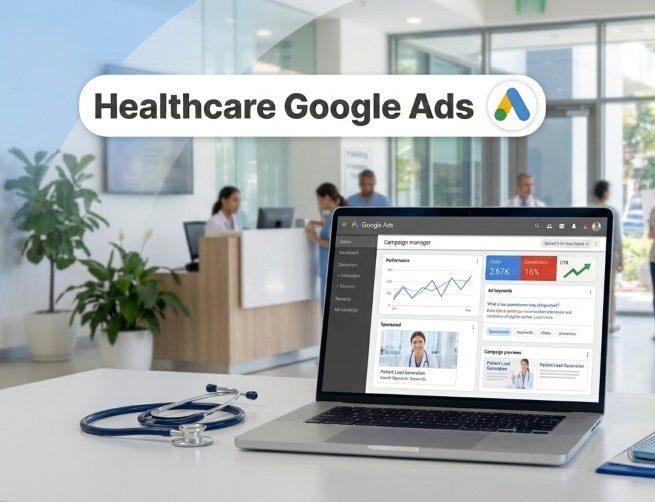
Healthcare Google Ads can be a primary way to attract customers if you understand and adhere to Google’s guidelines. They allow you to target specific regions, demographic groups, or users searching for similar products or services.
However, healthcare ads require a special approach due to numerous restrictions. Without adhering to Google policies, the money invested in promotion will not yield significant results.
By engaging Google Ads experts, you will achieve high visibility for your medical services. This will increase brand awareness and attract visitors to your website.




Why Is Ad Optimization Important?
Ad optimization is essential for both building trust with patients and fine-tuning your campaigns to comply with Google policies. Optimizing your advertisements will improve patient targeting and reach, reduce customer acquisition costs, and increase conversion rates.
By generating more high-quality leads from Google Ads, you can focus on this promotional method. This will save time and resources by eliminating less effective marketing strategies.
How to Improve Google Ads and Increase Conversions
To stand out from the competition and turn your advertising into a growth engine, you’ll need a comprehensive approach. It must take into account both Google’s promotion algorithms and consumer psychology.
Prioritize keywords
Researching and using popular keywords in your ad content lets you directly connect with potential patients through Google search. Your healthcare adwords will be shown to users actively searching for similar medical care.
Build the right campaign structure
An effective advertising campaign structure helps ensure regulatory compliance and improve patient relevance. To build the perfect campaign structure, you need to:
- adhere to Google's policies;
- ensure service-line segmentation;
- pay attention to local targeting;
- comply with HIPAA regulations;
- consider restrictions on advertising for pharmacies, certain types of treatments, etc.
Keep search intent as the main focus
Intent-based ads help you achieve higher conversion rates. With this marketing tactic, you are targeting not patients simply researching symptoms, but those seeking medical care.
Refine your parameters
Strict parameter refinement helps prevent irrelevant clicks, which increase your advertising budget. By using negative keywords, you prevent ads from appearing to users who are not your potential patients.
Since healthcare is a sensitive category, parameter refinement is necessary to ensure regulatory compliance and privacy. This will help avoid “Eligible (Limited)” restrictions, limiting the target audience that can see your advertisements.
Monitor and evaluate performance
Monitoring the performance of Google Ads for healthcare is essential for optimizing marketing campaign spending. By conducting regular analysis and evaluation, you can improve patient acquisition and make adjustments to ensure regulatory compliance.
Google Adwords Healthcare: Common Mistakes
Mistakes in designing Google Ads can lead to reduced conversions and more serious consequences. The least severe of these are ad disapproval and account suspension, while the most serious are legal liability and regulatory fines.
If you haven’t done preliminary keyword research, your content may attract non-patient traffic. For example, you might include overly broad keywords that people use to search for general health advice.
In this case, you’ll be paying for clicks that have no chance of converting users. Furthermore, irrelevant keywords reduce your ad’s visibility to potential patients, thereby wasting your marketing budget.
Violating compliance requirements is the most serious mistake you can make with Google Ads for medical care. It can lead to significant legal penalties and damage to your business’s reputation.
If a landing page doesn’t inspire trust in potential patients, conversions will fail. Visitors will abandon the site and seek care elsewhere. As a result, your campaign budget will be wasted, as the ROI will be low.
Ad tracking allows you to determine which keywords generate appointments and which simply result in clicks. If you neglect this task, you won’t know what to improve and how to optimize your advertising campaigns.
Healthcare Adwords: Understanding Ad Eligibility Statuses
Approval processes for a healthcare Google Ads campaign are complex due to strict regulations at multiple levels. These include government policies, Google search engine rules, and platform-specific requirements.
Advertising with Google is subject to various eligibility criteria that determine who can view your ad. To successfully conduct a promotional campaign, advertisers need specialists familiar with Google policies and ad eligibility statuses.
Copify has deep expertise in promoting businesses in the healthcare industry. Our professionals will help you achieve the best possible status for your ads and make them as visible as possible to your target audience.
Summary table of Google Ads statuses
| Status | Restrictions | Typical Cases |
|---|---|---|
|
Under Review
|
Status not yet determined
|
New or edited ads, content with sensitive information under review |
|
Disapproved |
The ad is blocked from showing |
Advertising of banned or experimental drugs, invalid certifications, etc. |
|
Removed |
The campaign is no longer running |
Deleted ads
|
|
Paused |
Temporary campaign pause |
Business reviews and improves its advertising strategy |
|
Eligible (Limited All Locations) |
Ad not showing in some geographic regions |
Medical services that require local licensing |
|
Eligible (Limited) |
There are some restrictions on ad showing, for example, personalized targeting is not available |
Often occurs with advertising on sensitive health topics such as cosmetic surgery, addiction services, mental health, etc. |
|
Eligible |
No restrictions on ad showing |
Non-sensitive health services |
Eligible (Limited) is common in healthcare advertising
Most medical-related ads receive some form of eligibility status on the Google Ads platform. Restrictions on showing the ads apply to sensitive areas of medicine or the need to obtain local licenses for businesses.
Connect with our Experts and get a FREE Consultation!
Compliance and HIPAA in Healthcare Google Ads Company
The Health Insurance Portability and Accountability Act (HIPAA) protect patients’ medical data from disclosure.
Although Google Ads is not HIPAA-compliant, businesses that fail to comply with this law when running advertising campaigns may face legal liability. Therefore, you should thoroughly evaluate your advertising content for compliance.
HIPAA considerations in digital advertising
Promoting medical care through digital advertising requires an understanding of HIPAA. Privacy regulations significantly limit the information you can use in advertising and the digital tools you can use.
Copify experts will help you implement best practices in Google advertising. Contact us to learn more about promoting your business with the Google search engine!
HIPAA protects personal information related to patients’ health and treatment. Therefore, you cannot use information that identifies a patient, their health problems, or their treatment plan.
If analytics tools share protected health information (PHI) with third parties without the patient’s consent, this violates HIPAA. Therefore, you should comply with tracking pixel restrictions when using tools such as Facebook Pixel, Google Analytics, and others.


Share This Page!
Related Posts